1
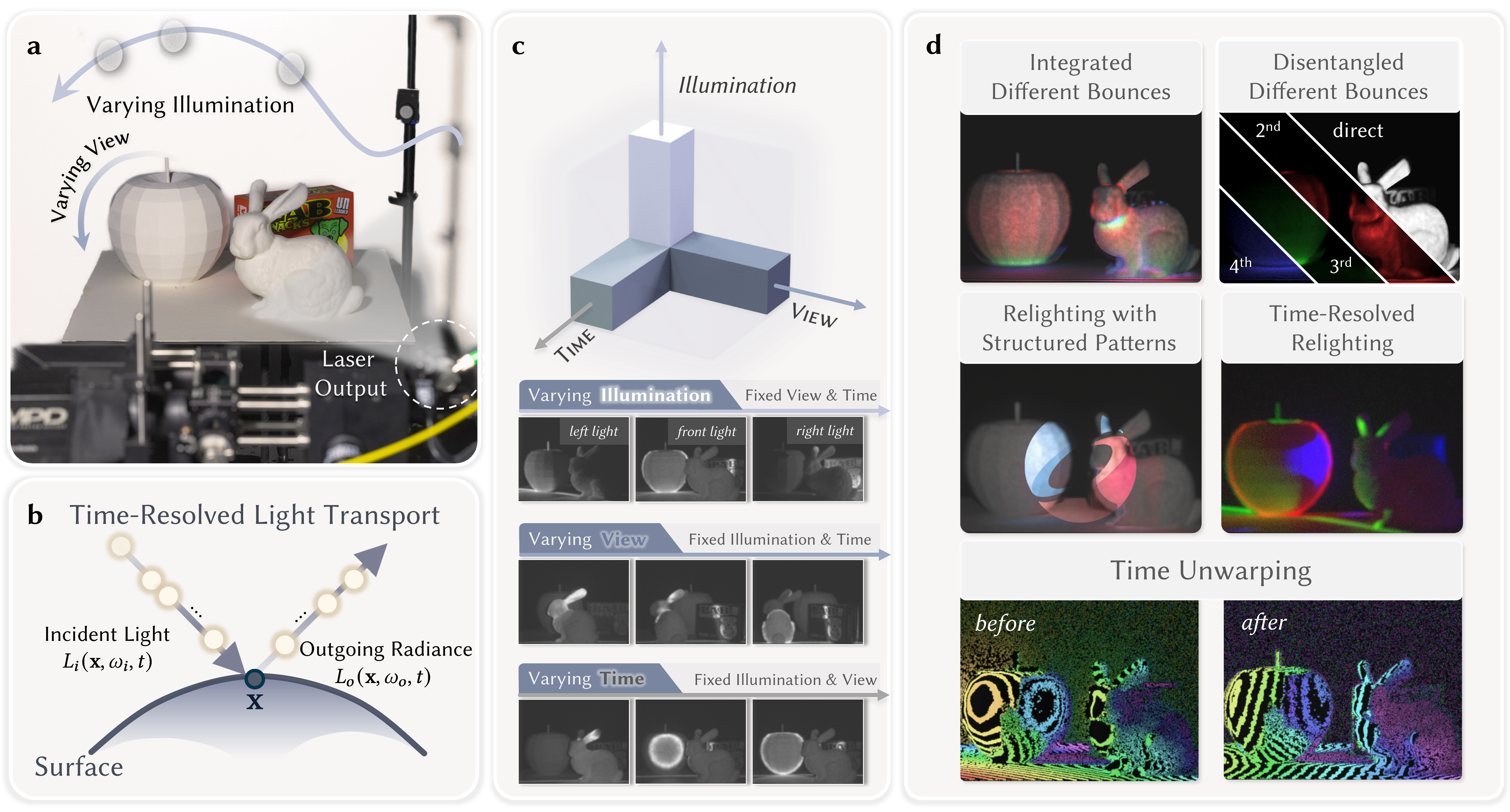
Decoupled transient capture
Separate illumination and detection paths allow the system to probe indirect transport under varying views and lighting conditions.
Recovering physically grounded, time-resolved plenoptic light transport from sparse real-world transient measurements.
1The Chinese University of Hong Kong, Shenzhen · 2ShanghaiTech University · 3Deemos Technology · 4Point Spread Technology
*Corresponding authors
GenPIE captures configurable views and illuminations, records transient light transport, and recovers plenoptic information for multi-bounce decomposition, time-resolved relighting, and time unwarping.
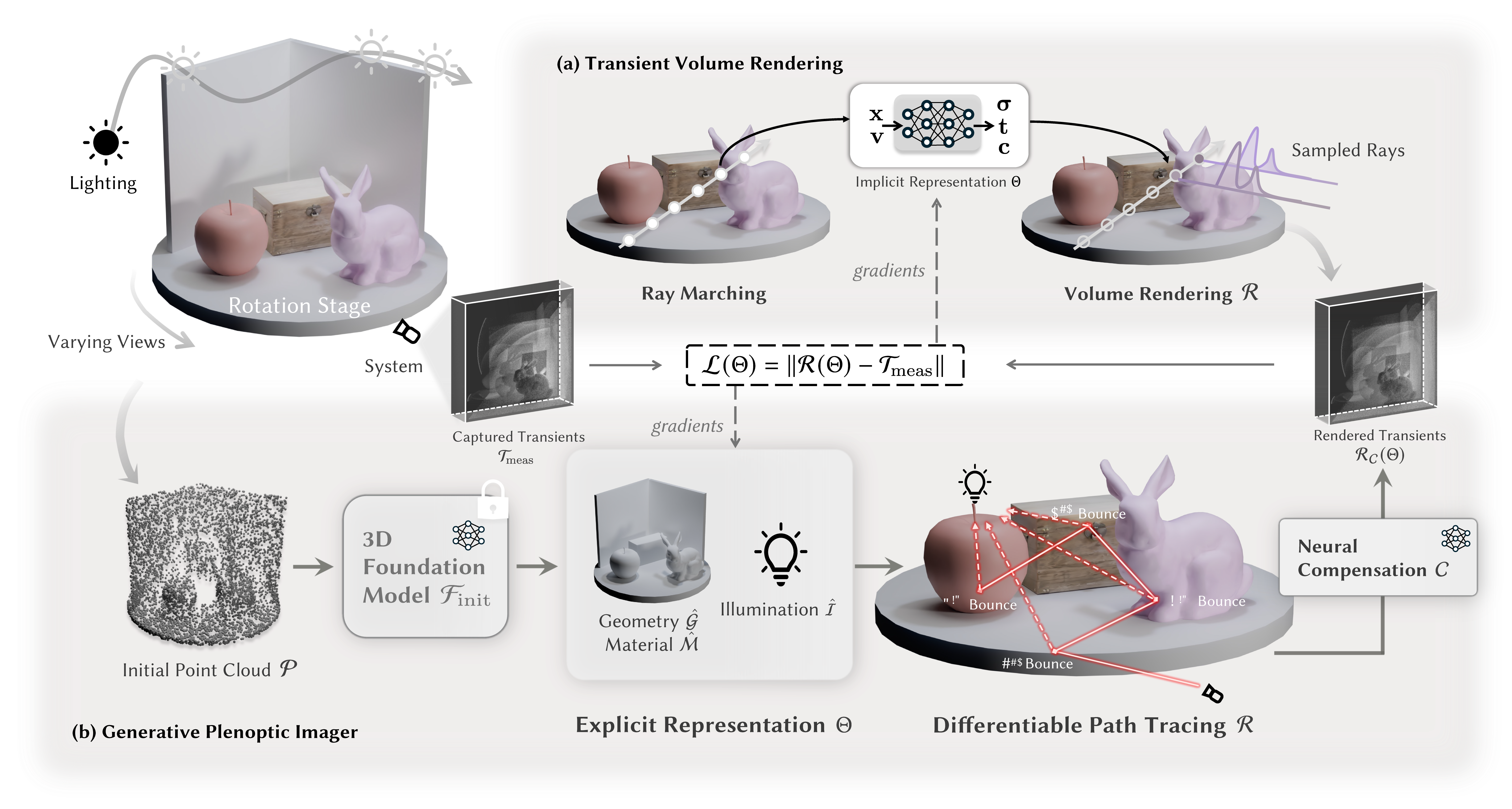
GenPIE bridges sparse physical observations and high-dimensional plenoptic light transport by combining a reconfigurable transient imaging system, generative 3D priors, and physically based inverse transient rendering.
Capturing the full plenoptic light transport across spatial, angular, and temporal dimensions has long been a pursuit in computational imaging, yet it remains fundamentally constrained by the high dimensionality of the sampling space and the physical inaccessibility of scene regions due to self-occlusions. While time-resolved imaging records the temporal axis, existing methods are bottlenecked by the combinatorial complexity of the plenoptic function. This high dimensionality makes dense omni-dimensional sampling physically prohibitive. Simultaneously, tight coupling between illumination and viewpoint in current systems also precludes the full acquisition of plenoptic light transport. We present GenPIE, a Generative Plenoptic Imager designed to bridge the gap between sparse physical observations and high-dimensional light transport. We demonstrate that GenPIE supports a range of applications that are challenging for steady-state or purely neural methods, including disentangling multi-bounce light transport directly from captured transient videos, time unwarping, and time-resolved relighting.
Separate illumination and detection paths allow the system to probe indirect transport under varying views and lighting conditions.
A 3D foundation model turns sparse transient-derived point clouds into complete geometric priors for otherwise under-observed regions.
Differentiable transient path tracing and neural compensation align recovered geometry, materials, and illumination with real measurements.
The pipeline first captures sparse but metrically meaningful geometry, then expands it with learned 3D priors, and finally enforces transient light-transport consistency through differentiable simulation.
Confocal mode provides direct time-of-flight geometry; decoupled mode captures plenoptic transients under configurable lighting.
A foundation model produces a complete initial mesh from sparse point clouds and integrated intensity observations.
Geometry, material, and illumination are refined by matching rendered and measured transient videos.
A spatially aware temporal kernel models real SPAD jitter, optical aberrations, and calibration residuals.
Because GenPIE recovers explicit, physically meaningful scene parameters, the result is not only a reconstruction: it can be decomposed, relit, temporally reinterpreted, and visualized through peak-time propagation.
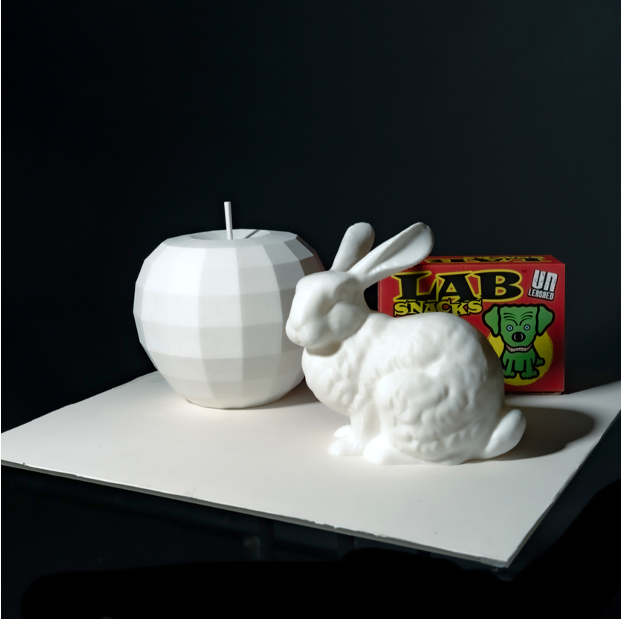
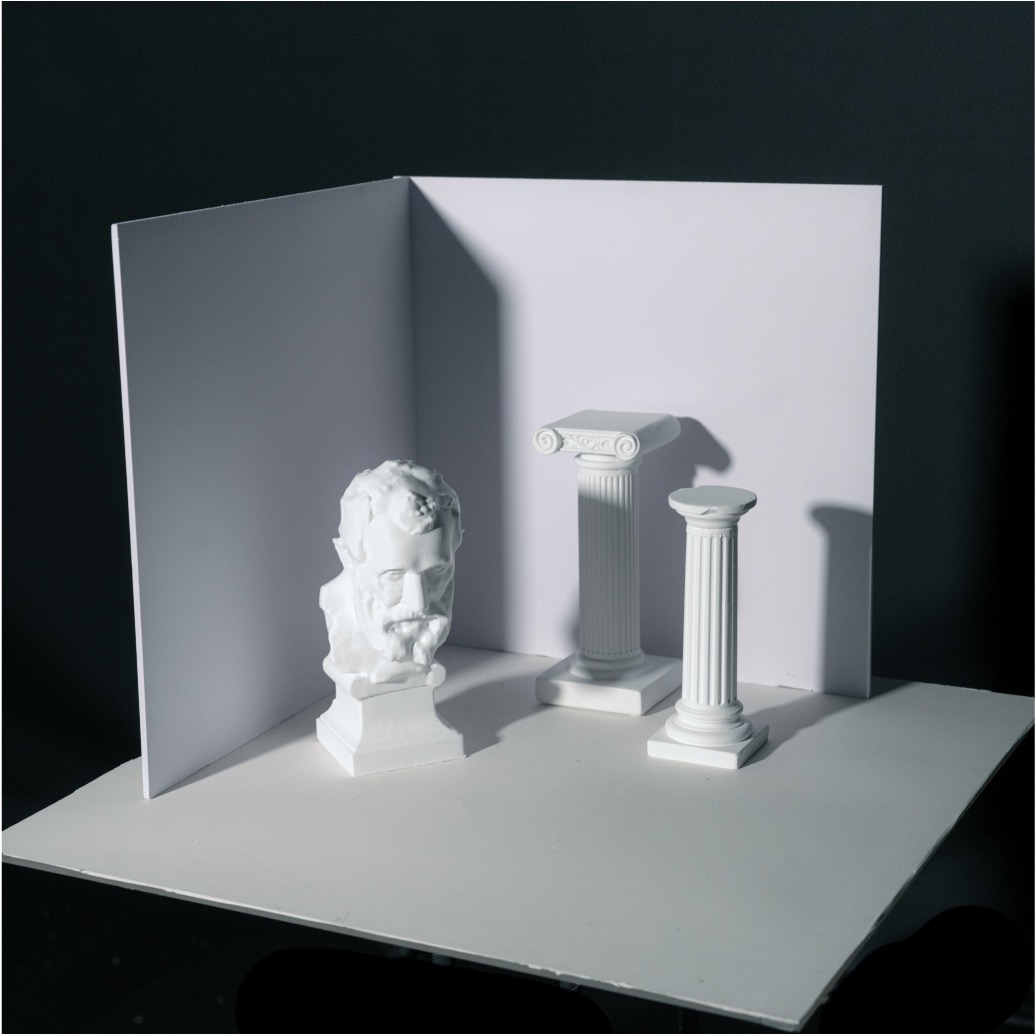
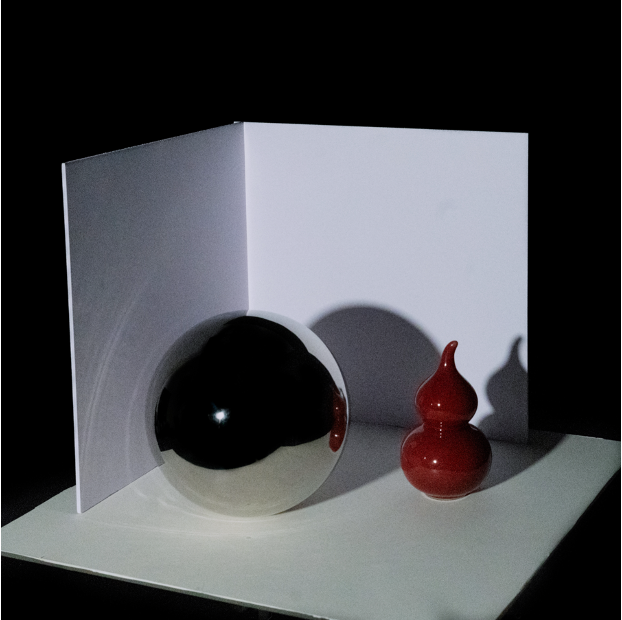
Captured color images for the three scenes used throughout the result section.
Separated direct and higher-order indirect transport.
Relighting with virtual light sources and projected patterns.
Each pair compares the captured transient before and after unwarping. Bunny pairs stay 1:1; the cola bottle pair is cropped to the lower region at 2.54:1.
Illuminated from left.
Illuminated from left.
Light travels through a bottle filled with scattering volume.
Before/after peak-time maps visualize how unwarping changes light propagation timing.
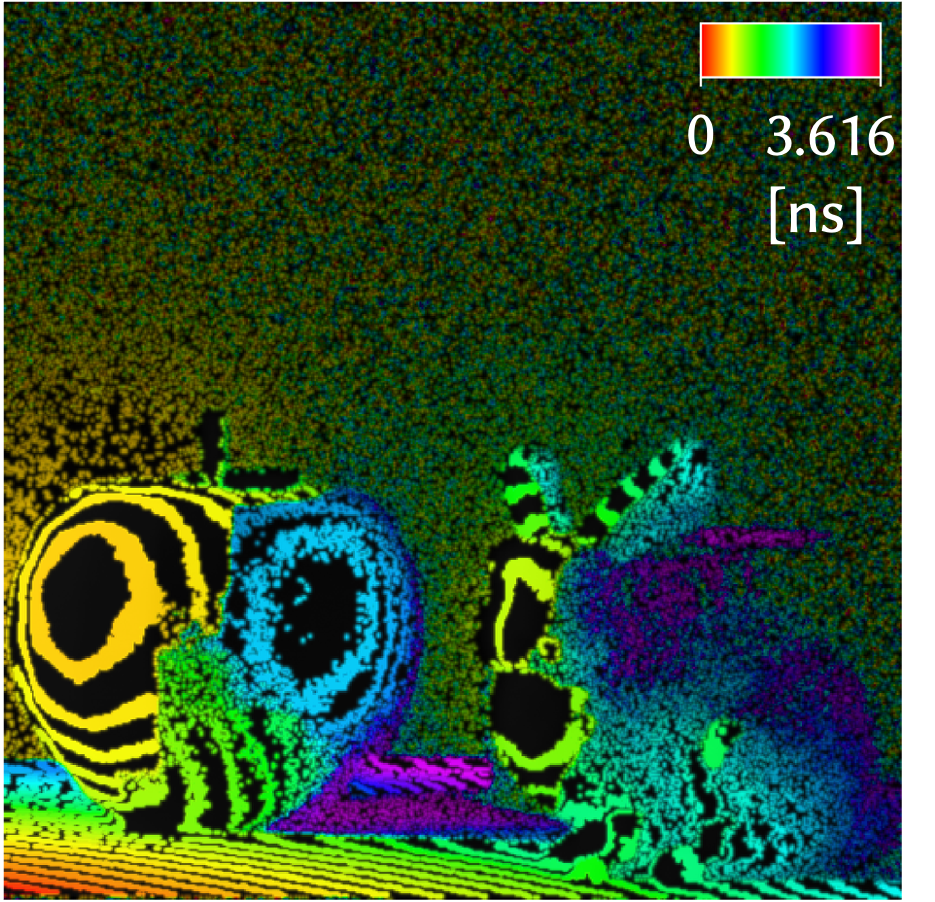
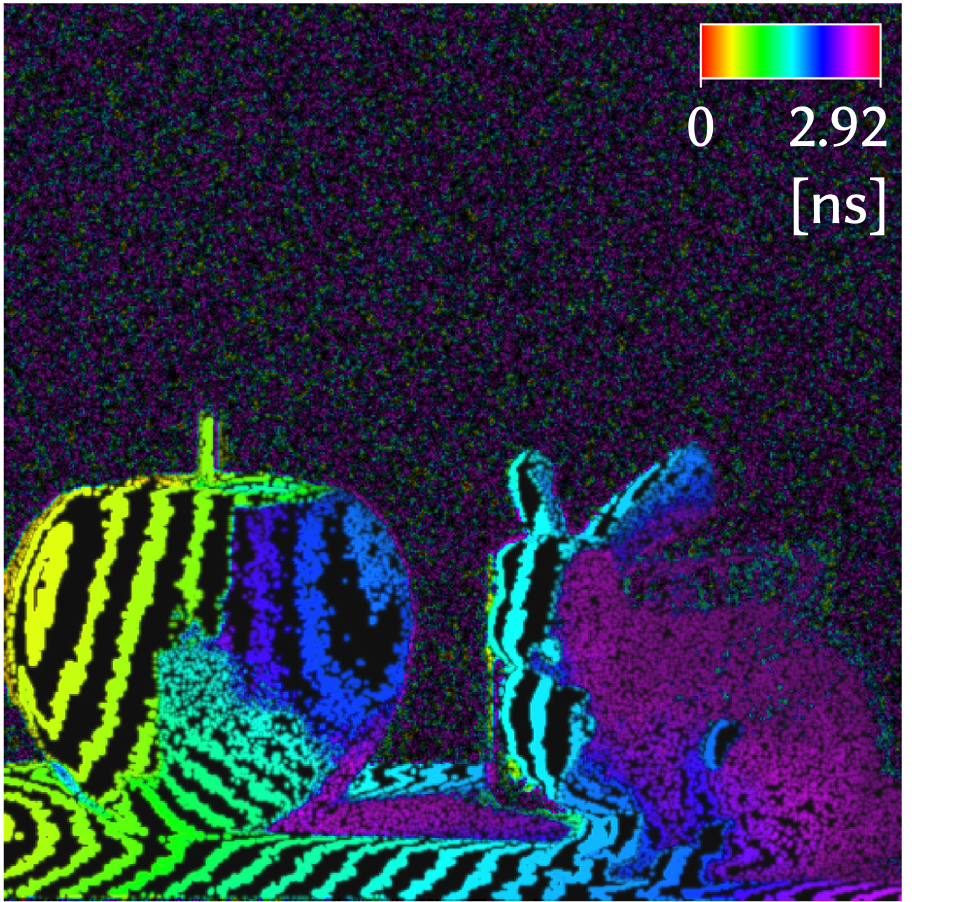
Peak-time color before and after unwarping.
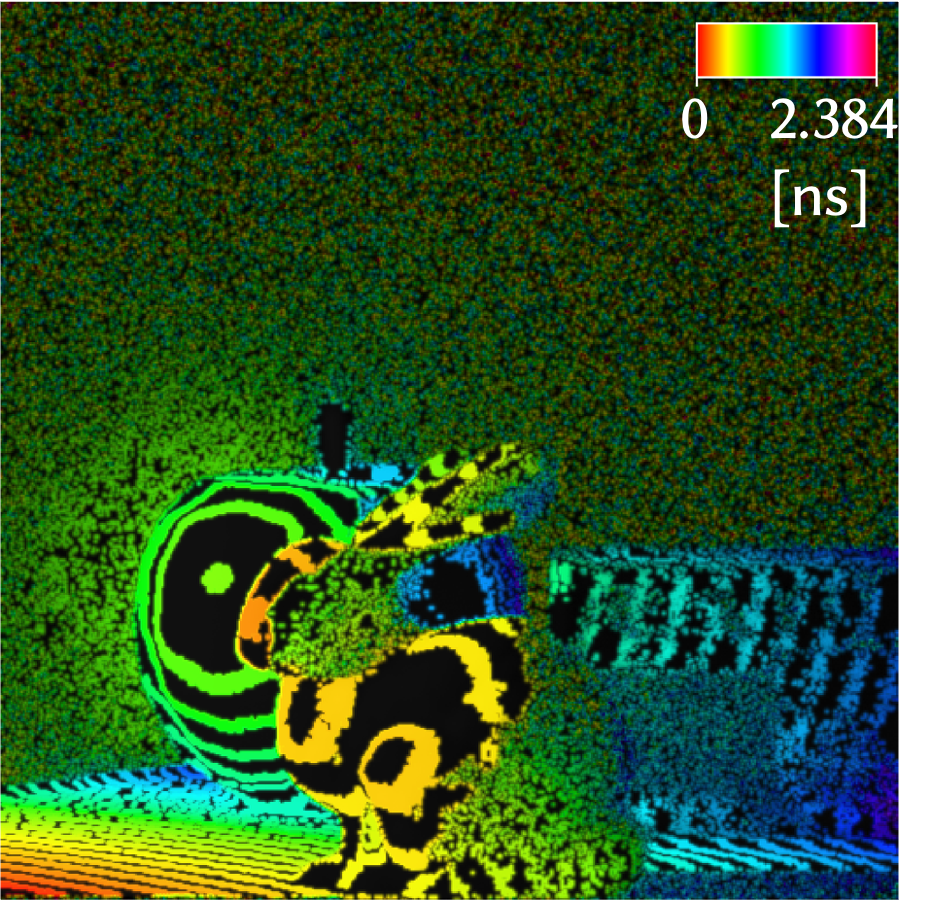
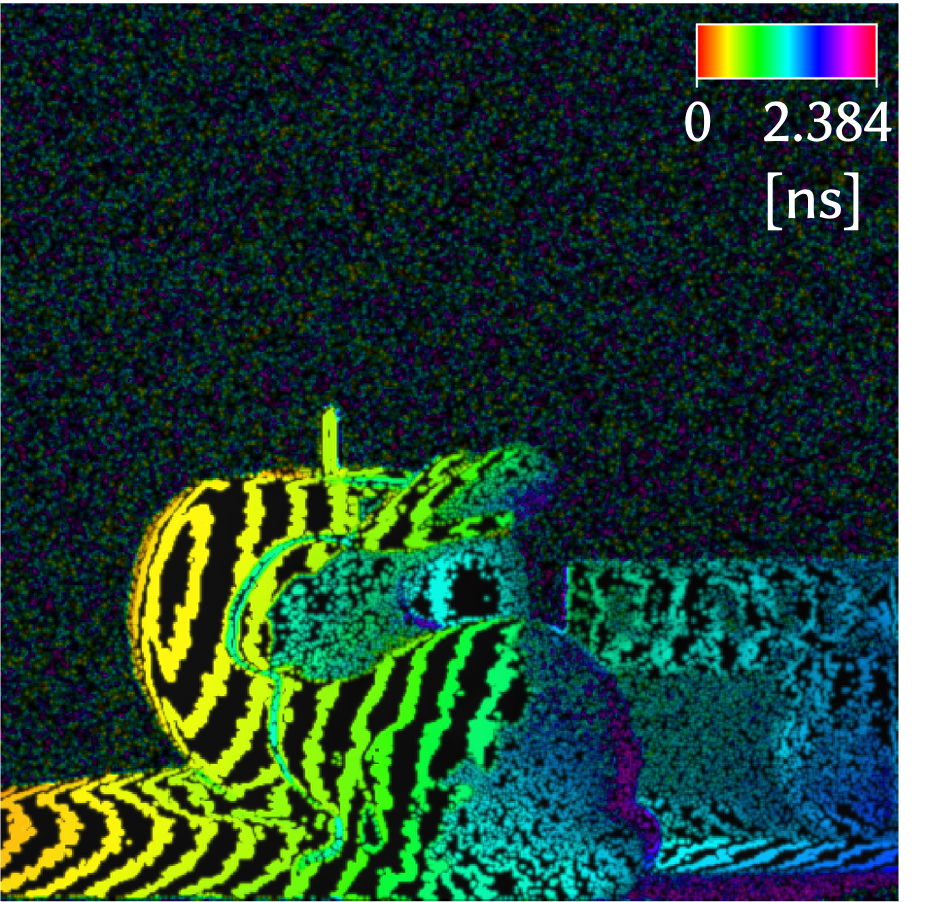
Peak-time color before and after unwarping.
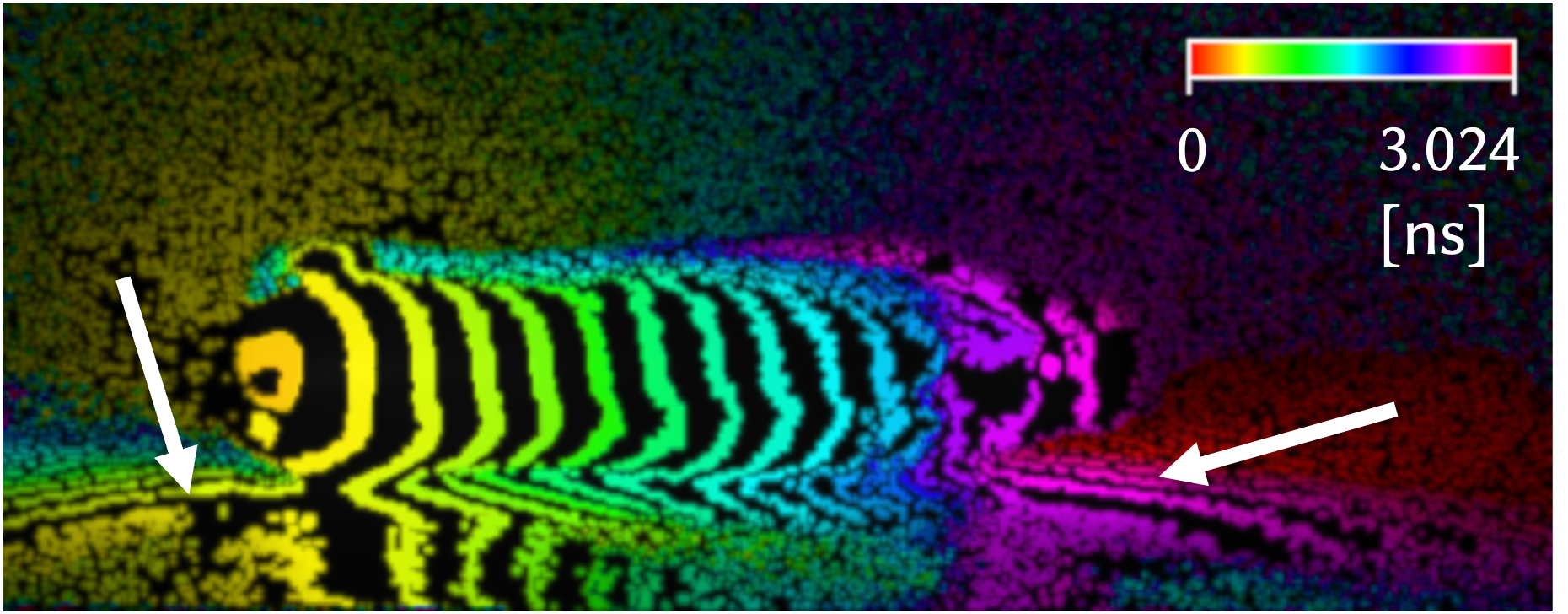
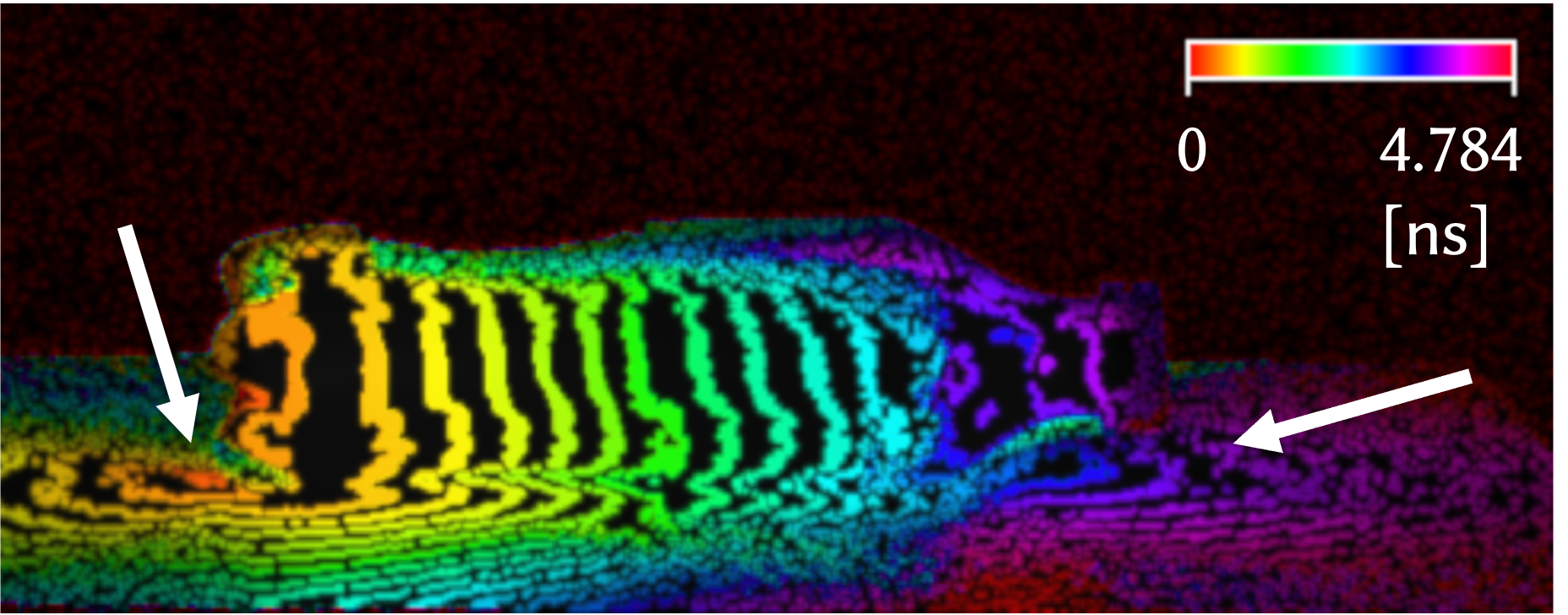
See arrows for unwarping effects.
Watch the project video for an overview of the GenPIE system, reconstruction pipeline, and time-resolved light transport applications.
TBA